English
 Bahasa

Smartly Manage Your Finances with Investment Strategies
Jumat, 29 Mei 2026
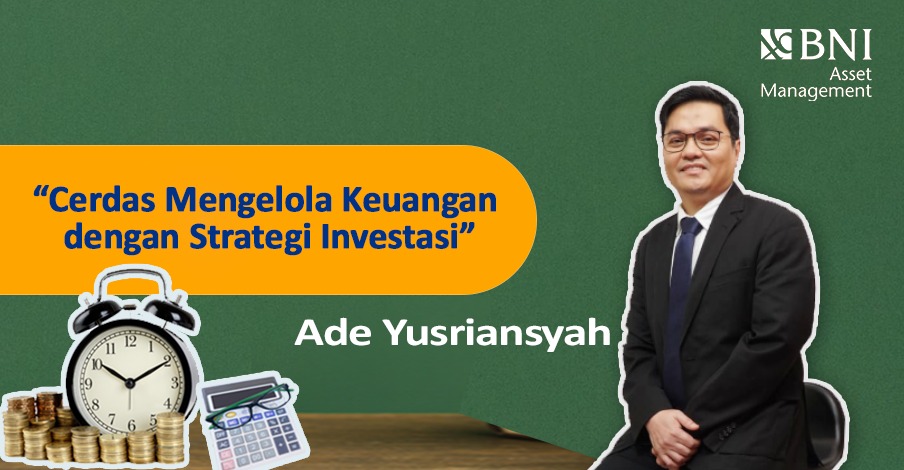
Pasardana.id - In line with the massive development of technology, especially social media platforms, over the past 2-3 decades, we have become more exposed to various types of information, one of which is information about financial management.
Through social media platforms like YouTube, Instagram, and others, we now more easily find various types of content, most of which aims to encourage viewers to achieve financial independence.
So, what are the recommended management strategies?
Some suggest investing directly in specific instruments.
Others encourage strengthening or building cash flow before investing.
And still others emphasize priority scale, using budgeting with a specific proportion, such as 50% for basic needs, 30% for investment/savings, and 20% for lifestyle.
If we try to understand more deeply, regardless of the type of management strategy, there is one thing in common: investment. What is investment?
Simply put, it can be defined as the investment of capital or money for future profit.
Meanwhile, comprehensively, investing must also consider risk factors such as risk profile, goals, and capital capacity.
The next question? When is the right time to invest?
Economists and financial experts emphasize that youth is the most strategic phase for building a long-term financial foundation.
This aligns with the example provided by Morgan Housel in his book "Psychology of Money," which explains that one of the keys to Buffett's success lies not only in his prowess as a person, but also in his timing. Buffett has been a phenomenal investor since he was 32.
Housel believes that if Buffett had started managing his finances in his 30s and retired in his 60s, few people would know him today.
In Indonesia, awareness of financial management is starting to emerge.
If we use capital market activity as a benchmark, KSEI data shows that the Indonesian capital market is no longer exclusive; There was a massive jump from 7 million investors in 2021 to 25 million by March 2026, or an average annual growth of 32.5%.
If we look more closely, still using KSEI data, based on the market composition, it turns out that the market is driven by individuals (99.77%), no longer dominated by institutions.
Regarding the demographics of individual investors, more than 80% are individuals under 40 (Gen Z to Millennials).
So, if we ask about the awareness of the younger generation, these figures certainly indicate a growing awareness among Indonesia's younger generation regarding financial management.
This figure is certainly encouraging, but not without risks.
So, what are the potential risks for young investors?
• Literacy level: This can be linked to an understanding of market mechanisms and risk profiles, which can impact emotional decision-making. Furthermore, the 2025 National Survey on Financial Literacy and Inclusion (SNLIK) shows a widening gap between financial inclusion and financial literacy, reaching 14.05%, compared to 9.59% in 2024. This indicates that more people are using financial services, but not everyone fully understands the benefits, risks, and strategies for long-term financial planning.
• Consumptive patterns: financial management that fails to curb excessive consumption, resulting in investments that fail to achieve their goals. Furthermore, an overly consumptive lifestyle has the potential to make Indonesia's younger generation vulnerable to online loans (pinjol).
• Excessive concentration of investment assets, for example, investing in crypto, can lead to significant potential losses during market corrections. Another example is the concentration of investments in deposits with low interest rates compared to inflation, which can lead to a decline in purchasing power. What are good investment tips or portfolio management strategies for young investors?
• Develop financial literacy; In theory, individuals with a good level of literacy can be considered to have an understanding of the benefits of financial products and services, thus supporting them in selecting and managing investment instruments to achieve prosperous retirement goals. Therefore, continuously developing basic knowledge is an essential part of consistently achieving future goals. Being a lifelong learner, and thirsting for new information and strategies to maintain literacy levels, will make our future steps more effective.
Don't Put All Your Money in One Basket; diversify your portfolio; this is a fundamental principle. Diversification doesn't mean dividing your money equally. For example, in stocks, use blue-chip stocks as the main foundation with the largest weighting, while strictly limiting the portion of highly volatile stocks to control risk. Another example: diversify into asset classes such as fixed assets (property and gold) and financial assets (money market, fixed income, and stocks).
• Strong discipline; without discipline, budgets can easily go bust. Start small: record daily expenses. Furthermore, never delay managing your finances. The sooner you start, the better the end result and the lighter the burden.
"Money management is crucial for achieving our goals. Awareness of its importance has become a concern across generations, including young people, as reflected in the high growth of investors among Generation Z and millennials. Inclusion from a young age is not without risks, but with strong discipline, good literacy, and portfolio diversification, all potential risks can be minimized," explained Ade Yusriansyah, Director of BNI Asset Management, in a written statement on Thursday (May 26).